It is currently Fri Aug 21, 2026 3:19 am

All times are UTC - 5 hours [ DST ]


Post new topic Reply to topic  [ 24 posts ]  Go to page 1, 2  Next
Author Message
 Post subject: Converting diesel locomotives
PostPosted: Sun Feb 13, 2011 1:40 pm 
User avatar

Joined: Fri Oct 24, 2008 9:05 pm
Posts: 1130
Location: MA
I got to thinking if a trolley museum were to get a small diesel locomotive, wouldn't converting it to a full electric locomotive be relatively simple? Locomotives tend to run there main generator at 600vdc the same as the line voltage on most trolley lines. seems all you would have to do is put a pantograph or trolley poll in and hook it up to the electrical cabinet. Through in a rheostat or a resistor grid and in theory it should work.


Offline
 Profile  
 
 Post subject: Re: Converting diesel locomotives
PostPosted: Sun Feb 13, 2011 2:25 pm 

Joined: Mon Aug 23, 2004 5:10 pm
Posts: 1182
It's not quite that simple. Most smaller diesels, the "industrial" 25-, 44-, 45-ton critters, use 250 volts DC for traction power.


Offline
 Profile  
 
 Post subject: Re: Converting diesel locomotives
PostPosted: Sun Feb 13, 2011 11:25 pm 

Joined: Sat Aug 28, 2004 3:25 am
Posts: 1025
Probably the best known electric/diesel unit is the FL9, which could run on the diesel generator (probably about 1700 hp) or on 600 volts DC picked up from a third rail. Back in the 1920's there were electric/diesel units and even electric/diesel/battery units. As far as converting a "critter" to a "juice jack" is concerned, a major consideration is the control system. Up to about 250 or 300 hp a type "K" controller would work (K-14's and K-35's come to mind.) Anything more than that and a switch-group system such as GE type M or Westinghouse HL would be the safer way to go. Then there's the question of resistance units. That's beyond my area of expertise, but if your membership does not include someone familiar with old-school control system design, you should seek outside help. Another question, is "how heavily will the proposed unit be used?" Are we talking about just moving one streetcar around a repair shop or hauling a three or four car demonstration train? Regarding the question of 250 vs. 600 volt motors: If it's a four motor 250 volt unit, you could hook pairs of motors in series, IF the insulation can take 600 volts at the high end. By now, you may realize that in the railroad biz, nothing is simple. As you can see, the thought of going "straight electric" is quite intriguing. We could also bring in the thought that such a "critter" would not be a piece of "railway preservation", but might be categorized as a "non-accessioned utility" unit. Orange Empire has two Alco RSD-1's that are in that category; they are painted in a museum-designed color scheme and are lettered for OERM. Now I will ask, is this an actively-considered program, where there's a certain small locomotive with a failed engine awaiting a final decision, or just a "let's run it up the flagpole and see who salutes" inquiry?

_________________
Bob Davis
Southern California


Offline
 Profile  
 
 Post subject: Re: Converting diesel locomotives
PostPosted: Mon Feb 14, 2011 12:37 am 

Joined: Thu Feb 26, 2009 3:07 pm
Posts: 1209
Location: B'more Maryland
It couldn't be harder than putting a 567 in a GG1.

Seriously though, doing something like that is pretty much the exactl opposite of historic artifact preservation.

Geez.

_________________
If you fear the future you won't have one.
The past was the worst.


Offline
 Profile  
 
 Post subject: Re: Converting diesel locomotives
PostPosted: Mon Feb 14, 2011 12:53 am 

Joined: Tue Nov 21, 2006 12:04 am
Posts: 665
Location: Northeast Ohio
Ed,
No reason to get all worked up, unless you have a bias against people who wish to learn...

RCD,
This is an interesting question. This would be a way for a trolley museum to make use of a locomotive that otherwise may be destined for the scrap heap, and knowing that old Baldwin Westinghouse steeple cab electrics aren't readily available on the used market anymore. A 44 tonner with dead D17000 engines would be a perfect candidate for such a conversion. Its electrical system is a nominal 600 volts. This would require a bit of thought since in a diesel voltage and amperage is varied depending on speed and load, where in a straight electric voltage is constant.

I've not really had much time to study the inner workings of electric locomotives but can't expect that it would be much different to how an old school DC overhead crane works.


Offline
 Profile  
 
 Post subject: Re: Converting diesel locomotives
PostPosted: Mon Feb 14, 2011 1:56 am 

Joined: Sat Aug 28, 2004 3:25 am
Posts: 1025
Pacific Electric had a small fleet of GE 44-ton center cab diesels (1650-1654) which had "dummy" trolley poles installed to trip grade-crossing signals actuated by contacts on the trolley wire. The trolley poles lasted for about ten years, but one of the 44's wound up on a short line in Texas, with the platform for the trolley base still in place. Reportedly, this unit survived into the 21st Century, but fell victim to an electrical fire. If someone is really serious about converting a GE 44-tonner to overhead electric power, they could letter it for PE, number it 1655, and call it a "tribute" locomotive (like "Santa Fe 2098" at the Campo museum--it's really from Kennecott Copper, but the only actual ATSF RS-3, 2099, was scrapped long ago.) When I saw the PE units as a boy, I thought they were a new type of electric locomotive, not learning about the "dummy" poles until many years later. Not within the strict boundaries of preservation, but I'd sure like to see one.

_________________
Bob Davis
Southern California


Offline
 Profile  
 
 Post subject: Re: Converting diesel locomotives
PostPosted: Mon Feb 14, 2011 9:46 am 

Joined: Thu Aug 26, 2004 2:50 pm
Posts: 2815
Location: Northern Illinois
Talk to Nick at IRM, he likely has an ex- elevated switch group he'd like to sell you. Cram the switch group in one hood, the resistance in the other, and away you go.

_________________
Dennis Storzek


Last edited by Dennis Storzek on Mon Feb 14, 2011 10:18 am, edited 1 time in total.

Offline
 Profile  
 
 Post subject: Re: Converting diesel locomotives
PostPosted: Mon Feb 14, 2011 10:06 am 

Joined: Tue Aug 02, 2005 1:25 pm
Posts: 6482
RCD wrote:
I got to thinking if a trolley museum were to get a small diesel locomotive, wouldn't converting it to a full electric locomotive be relatively simple?


Maybe this was just a rhetorical question, but wouldn't restoring an electric freight motor be a better way to go? That is, IF the idea of the question was a way to get a switcher to do some work around a trolley museum. Aren't there some still out there that beg restoration?

Les


Offline
 Profile  
 
 Post subject: Re: Converting diesel locomotives
PostPosted: Mon Feb 14, 2011 11:15 am 

Joined: Sun Aug 22, 2004 8:28 am
Posts: 2732
Location: Salt Lake City, Utah
This is kind of an "omnibus" reply, so I apologize if it is rambling....

The question isn't as silly as one might think. I thought I read in Dale Jenkins' book on the Illinois Terminal that the railroad did some tests with overhead controls in one of their RS-1s when they were looking to drop the wire on the electric division. They wanted to keep wire in the towns with street running, so they explored the dual power concept. The IT also did an over the road freight test with 3 RS-1s, and a caboose with poles. The caboose was to activate the signals using the dummy pole, like the PE. In the end, the IT decided to go all-diesel, and installed electric eyes just over the wire for signal activation. The GP7s had a headlight casing in the roof of the locomotive, containing a light to activate the signal.


I believe the early FL9s had problems (fire!), as their electrical system wasn't as robust as an electric locomotive's.

For a trolley museum today, the easiest answer is to get one of those "free" GE 45 tonners located in Louisville. I believe the prime movers are still somewhat supportable, as compared to the CATs in the 44 tonners, and you have something that is not dependant on overhead power, so you can build storage tracks not under wire, etc.

For the record, I believe that GE built at least 1 "modern" 600v center cab that looks like a 44 tonner with poles. It was at the Kansas City Public Service freight operation, and ended up on the M&H in PA. Anyone have any photos? I wonder what the control system is?

_________________
David M. Wilkins

"They love him, gentlemen, and they respect him, not only for himself, for his character, for his integrity and judgment and iron will, but they love him most of all for the enemies he has made."


Offline
 Profile  
 
 Post subject: Re: Converting diesel locomotives
PostPosted: Mon Feb 14, 2011 2:56 pm 

Joined: Sun Aug 22, 2004 12:15 am
Posts: 585
David,

The early FL-9 problems had nothing to do with the robustness of the electrical system, it was the emergency catenary pickup on top of the engine catching the low hanging catenary wire on the system.

The first group of FL-9s had a small pickup installed on the roof behind the diesel exhaust, so that if the locomotive stopped over one of the switches in the tunnels leading to Grand Central station, they could get going without starting the diesels. The tracks from the CT/NY state line into the station all have 3rd rail supply power, and the third rail is moved to the ceiling of the tunnel over all the switched. The catenary system around the NY,NH&H were low and this all predated the constant tension system we have now a days. During the summer, the wires would hang extra low and catch the pick-ups every so often and the results would be a mile or so of wire on the ground jumping around and throwing sparks everywhere. This is why the second group of FL-9s came without the emergency collectors.

Also IIRC the 3rd rail is 600 Volts AC not DC.

Rich C.


Offline
 Profile  
 
 Post subject: Re: Converting diesel locomotives
PostPosted: Mon Feb 14, 2011 6:27 pm 

Joined: Sat Aug 28, 2004 3:25 am
Posts: 1025
At least one of the Niagara Junction freight motors, which looked like "cousins" to the GE center-cab diesels, still exists. According to Preserved North American Electric Railway Cars there is a straight electric locomotive for sale at Ohio Railway Museum. Their listing also shows two Chicage "El" cars, 4441 and 4449, one is for sale and the other is to be scrapped, so there might be a source for control apparatus. There's been no indication of where the museum group that is contemplating this project (however serious the idea really is) is located, and also what they may have in the way of resources (spare controller equipment, electric powered air compressors?). I'm trying to envision what this "iron mule" would be like should it actually come to pass--imagine what looks like a small diesel with interurban-sounding air pumps and HL switchgear sounds! The whole concept is not in the realm of physical preservation, it's more like exemplifying the "can do" and "do with what you got" spirit of many shortline and interurban railways of days gone by.

_________________
Bob Davis
Southern California


Offline
 Profile  
 
 Post subject: Re: Converting diesel locomotives
PostPosted: Mon Feb 14, 2011 7:41 pm 

Joined: Sun Aug 22, 2004 9:54 am
Posts: 1043
Location: NJ
The NYC third rail was 650 DC; the New Haven passenger electrics and MUs used 11,000 AC on their own line, and switched to under-running 650 DC third rail into Grand Central. Perhaps the New Haven's 11k AC is causing some confusion here.


Offline
 Profile  
 
 Post subject: Re: Converting diesel locomotives
PostPosted: Tue Feb 15, 2011 1:49 am 

Joined: Sun Oct 19, 2008 12:58 pm
Posts: 1352
Location: Chicago USA
The little mini-pantograph / 3rd rail collector for the ceiling-mounted third rail only has a reach of...what...a couple feet at most? Hard to imagine catenary dropping low enough to be snagged by that, particularly while not extended.

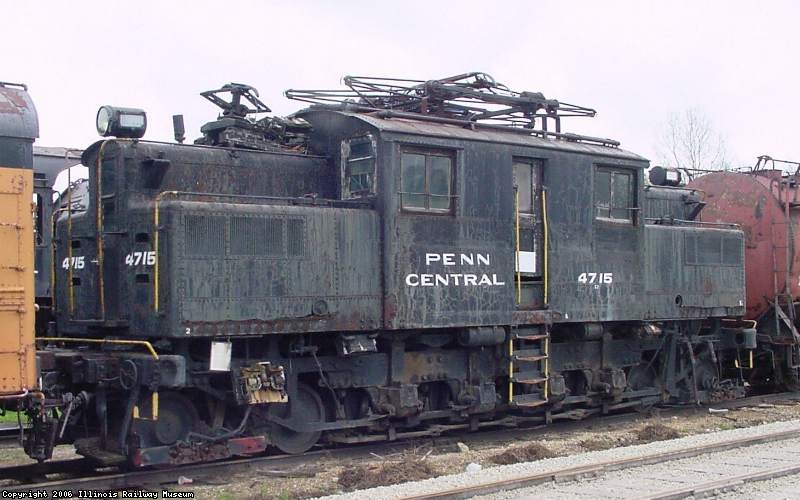
Here is a photo of the Grand Central S-motor now at IRM. I presume the FL-9 device was similar. It's the one on the front hood. Please ignore the big pan on the cab roof which was installed by IRM to use their trolley wire as there is no third rail at the museum. The little pan doesn't need as much range as a ceiling mounted third rail isn't going to vary much in height.

http://www.irm.org/cgi-bin/image.pl?con ... 15/aaa.jpg

Steve


Offline
 Profile  
 
 Post subject: Re: Converting diesel locomotives
PostPosted: Wed Feb 16, 2011 6:54 am 

Joined: Thu Nov 22, 2007 5:46 am
Posts: 2611
Location: S.F. Bay Area
OK, I was thinking about this on the GG1 conversion thread.

I prognosticate that traditional streetcar controller groups WILL NOT WORK for a diesel locomotive, unless it is very very small.

Fundamentally your problem is that diesels "cheat" to regulate voltage to the motors. They reduce the voltage source. You have NO good way to do that using streetcar technology. The K-controller is right out, it cannot handle the horsepower. A switch group can handle the horsepower, for instance the South Shores had 840hp in a Westinghouse HB system. The real problem is getting fractional voltage, CONTINUOUSLY. Streetcar/interurban resistance grids are not designed to cruise "in point". They're designed for you to transition through them in only a few seconds per point, max. That's not nearly long enough to start a freight train, so your choices are spin your wheels or set resistors on fire. Your resistors will also need to be enormous, and you will need ways to get the heat outta there so you don't cook the engine or the engineer!

How do the big electric locomotives solve this? I expect you'll find a lot of monkeyworks that does 3-stage series parallel (4 series, series parallel, 4 parallel) and manipulates fields, and resistor grids sized for continuous use.

However in **THIS** Day and age, since you're kitbashing, resistors are a futile way to regulate voltage. The far better way is choppers. Take 600V@200A, and chop it to pretty much 200V@600A. Very little conversion loss compared to resistors, and so much less heat and waste. And then you are "creating" a 0-600VDC power source, that can replace the diesel and in fact works in much the same way. The exciter signal goes to the chopper control. You retain all other switchgear as is. Your electric EMD could even MU with the diesel ones. You could also "dial-a-horsepower" so as to keep the substation man happy, even have it do smart things like current limit as it sees trolley voltage drop below "X". EV choppers already know how to do this, you just set parameters.

Using the specific gear out of the 4000-series El Cars (4441/4449) would not work. That is Westinghouse AB equipment: It automatically steps through points for you. And it's assuming it is an "El" car, and not dragging 30 freight cars. At Michigan Transit Museum,the two El cars (4442/4450) pulled only a 100-ton Alco S1, and it stepped through points too fast.


Offline
 Profile  
 
 Post subject: Re: Converting diesel locomotives
PostPosted: Wed Feb 16, 2011 7:06 am 

Joined: Thu Nov 22, 2007 5:46 am
Posts: 2611
Location: S.F. Bay Area
By the way, I've got the mind (but not the resources) to convert a 30T Plymouth critter to a battery-electric with a little topoff generator. A critter is small enough an off-the-shelf "Zilla" controller should do the job. Size the generator right so it's running at peak efficiency most of the time. Plug in at terminals for the first couple of miles free.


Offline
 Profile  
 
Display posts from previous:  Sort by  
Post new topic Reply to topic  [ 24 posts ]  Go to page 1, 2  Next

All times are UTC - 5 hours [ DST ]


You cannot post new topics in this forum
You cannot reply to topics in this forum
You cannot edit your posts in this forum
You cannot delete your posts in this forum
You cannot post attachments in this forum

Search for:
Jump to: