It is currently Fri Aug 21, 2026 2:52 pm

All times are UTC - 5 hours [ DST ]


Post new topic Reply to topic  [ 42 posts ]  Go to page Previous  1, 2, 3  Next
Author Message
 Post subject: Re: What is preservation?
PostPosted: Mon Apr 07, 2014 5:23 pm 

Joined: Mon Jan 27, 2014 1:26 pm
Posts: 19
I don' t own any railroad equipment except a couple of miles of abandoned Wabash trackage. It has no preservation, but in the old car world , I try to keep my old cars from deteriorating any more like storage in a garage , keep original appearance, and make improvements, like disc brakes for highway use. my definition of preservation. James. hocarsandtrains


Offline
 Profile  
 
 Post subject: Re: What is preservation?
PostPosted: Mon Apr 07, 2014 10:08 pm 

Joined: Mon Feb 17, 2014 4:20 pm
Posts: 487
(Message deleted.)


Last edited by rock island lines on Wed Apr 09, 2014 12:04 am, edited 2 times in total.

Offline
 Profile  
 
 Post subject: Re: What is preservation?
PostPosted: Tue Apr 08, 2014 9:58 pm 

Joined: Thu Jul 12, 2007 3:37 am
Posts: 152
An interesting thread, which shows that every circumstance can be different.
One thing that I feel should be said is the need not to mislead or tell outright fibs.
If you can't maintain or restore to the optimum criteria, document the reasons for that.
The Pullman sleeper I've been working on for nearly 14 years could undoubtedly be done better in some areas if I had access to a couple of hundred grand, (and some really skilled tradesmen) but I don't.
It's been an oily rag job, but via our society's newsletter, I've documented what's been done and why.
I'm currently having to determine if we can afford to get about 1600 coil springs made to make new seat cushions. The cheaper alternative would probably be to go foam.
The finished product will most likely look the same and would the public know one way or another?
If I have to go foam because of costs, at least I'll have enough old seats to be able to present the way they were originally done and if so, I'll be open and honest about that.
I think that's a much better way to go about things than hide your head in the sand and be criticised after you've died for being a shonk.
If only we all had access to a bottomless pot of gold......
Cheers, Bob


Offline
 Profile  
 
 Post subject: Re: What is preservation?
PostPosted: Tue Apr 08, 2014 11:07 pm 

Joined: Mon Aug 23, 2004 12:57 am
Posts: 257
Location: Sandpoint, ID
A philosophical question comes to the fore: all preserved locomotives have suffered many changes along their lives, of which perhaps the most frequent one was fitting a superheater. What should be the state selected for preservation? The last one? Has that process ended? A steam locomotive is more than the cold hardware: it is a live being; all the alterations introduced along its life are the proof of this. In fact, it is a modernization process. Figs. 2a/b show an Argentine locomotive built in 1888 the valve gear of which was altered by the author in order to improve her performance. This was necessary because of cars added to the historical train which she pulled. Retrofitting the GPCS is now being considered to avoid the sparks resulting from wood firing. To appease pure preservationists, No. 10, a sister engine, has also been put in service in its original condition as a 0-6-0. The moral is that each museum should offer the general public and locomotive students an example of a full modernization showing that the steam locomotive is far from being dead: this is more important than putting fossils on exhibition!

Excerpt from:

Fundamental Principles of Steam Locomotive Modernization and Their Application to Museum And Tourist Railway Locomotives
Ing. Livio D. Porta, Consulting Engineer


Offline
 Profile  
 
 Post subject: Re: What is preservation?
PostPosted: Wed Apr 09, 2014 12:31 am 

Joined: Tue Jun 26, 2007 12:00 am
Posts: 554
Location: Dallas ,Texas. USA
You should read a copy of L&RP #45

The article; "Dean Of Presrvation", John Hoxland White Jr."

Mr. White was the priciple figure in the Smithsonian Rail preservation program.
He had strong opinions on the subject.

The article starts on page 22

_________________
Loco112 (NarrowGaugeExchange Forum)

Our "paper" archives will be the future railfans only hope. We (yes you too!) should endeavor to preserve all the info needed to allow them 100% accuracy in the building of their recreations.


Offline
 Profile  
 
 Post subject: Re: What is preservation?
PostPosted: Wed Apr 09, 2014 10:39 am 

Joined: Sat Oct 22, 2011 5:07 am
Posts: 82
Here is some European information:

"Charter of Venice" regarding historical buildings and the like
and
"The Riga Charter" its application to heritage railways.
Google will do the search.
Kind regards
Jos Koopmans


Offline
 Profile  
 
 Post subject: Re: What is preservation?
PostPosted: Wed Apr 09, 2014 12:45 pm 
Site Admin

Joined: Sat Aug 28, 2004 1:15 pm
Posts: 1502
Location: Henderson Nevada
One of the basics in any Historic Structures report (aka restoration feasibility study) is identification of “contributing features” and “period of significance.”

When writing a report I generally create a time line for the object, listing changes, and which features are found at each time, and the significance of each… With that information you can then frame a discussion about what changes might be removed, (and therefore lost) and what features might be recreated (including a discussion of how to recreate and particularly, questioning if we have sufficient information to accurately recreate a feature)

It is appropriate to look at related artifacts in other yours or other collections… Are they preserving a feature that your restoration might lose, so the feature is preserved?
You can ask how you are going to interpret the artifact, and what its role in your collection is.

Once those questions are answered, you can have a discussion about how to restore or preserve a specific object…

Randy

_________________
Randy Hees
Director, Nevada State Railroad Museum, Boulder City, Nevada, Retired
http://www.nevadasouthern.com/
https://www.facebook.com/FriendsOfNevadaSouthernRailway


Offline
 Profile  
 
 Post subject: Re: What is preservation?
PostPosted: Wed Apr 09, 2014 1:02 pm 

Joined: Fri Apr 19, 2013 12:11 am
Posts: 12
The National Park Service, the government agency in charge of administering historic preservation research and documentation, and the keeper of the National Register of Historic Places, has developed a set of specific definitions about each of these words, or "treatment approaches," as they each do have a different and specific meaning. These are better known as the Secretary of the Interior's Standards for the Treatment of Historic Properties. The definitions were based on the concept of work to historic buildings, but this can easily be adapted to railroad equipment as in many cases railroad cars are nothing but buildings on wheels. In terms of mechanical equipment, operations, material and replacement, I'll echo comments generally made previously in this thread.

According to the National Park Service:

The four treatment approaches are Preservation, Rehabilitation, Restoration, and Reconstruction, outlined below in hierarchical order and explained:

The first treatment, Preservation, places a high premium on the retention of all historic fabric through conservation, maintenance and repair. It reflects a building's continuum over time, through successive occupancies, and the respectful changes and alterations that are made.

Rehabilitation, the second treatment, emphasizes the retention and repair of historic materials, but more latitude is provided for replacement because it is assumed the property is more deteriorated prior to work. (Both Preservation and Rehabilitation standards focus attention on the preservation of those materials, features, finishes, spaces, and spatial relationships that, together, give a property its historic character.)

Restoration, the third treatment, focuses on the retention of materials from the most significant time in a property's history, while permitting the removal of materials from other periods.

Reconstruction, the fourth treatment, establishes limited opportunities to re-create a non-surviving site, landscape, building, structure, or object in all new materials.

---

You can learn more about the Standards here (something every aspiring preservationist or restorer should know a little something about): http://www.nps.gov/history/hps/tps/stan ... _treat.htm

That is a summary of a much longer document, which can be viewed in pdf form here: http://www.nps.gov/tps/standards/four-t ... elines.pdf


Offline
 Profile  
 
 Post subject: Re: What is preservation?
PostPosted: Wed Apr 09, 2014 3:02 pm 

Joined: Sun Aug 22, 2004 7:25 pm
Posts: 2559
Location: The Atlantic Coast Line
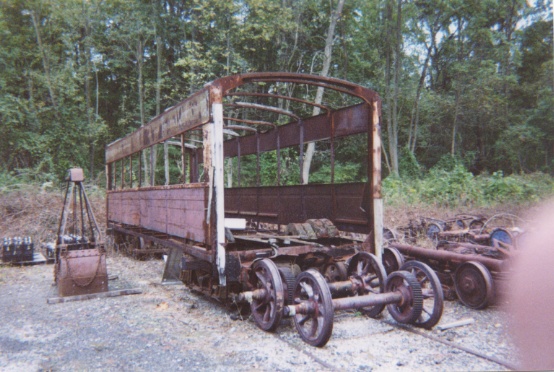
Image

In what category does Scranton 505 fit as shown here:


ARM Terminology
Conservation: Planned management of a collection to prevent deterioration,
exploitation, destruction or neglect.

Preservation: The act of keeping an object intact and safeguarding it from any
further changes beyond those which it has already undergone.

Operation/use: A specific class of objects accessioned into the permanent collection that are primarily to be used for operation on a regular or semi-regular basis. Original fabric, machinery, material or appearance may be secondary to safe
and reliable function. May be further formally subclassified as a demonstration
collection-to be operated heavily, kept in general historical form though
materials may be substituted for safety; may include creating replicas or near-
replicas for operating use; or equipment designated for limited use to ensure
preservation, yet available for some operation to supplement normal role as
static exhibits.

Restoration: The act of returning an existing object to an original appearance and condition through treatments such as cleaning, painting, removing later additions, replacing missing parts, etc. Original fabric or exact reproduction parts, finishes, or materials may be used. All work is based on a specific restoration plan for that object. If an object is restored and intended for operation or demonstration, subsequent work performed to ensure continued use is often not classified as restoration.

Replica: The use of new or non-historic materials or items to accurately duplicate an original object.
====
NPS Terminology
The first treatment, Preservation, places a high premium on the retention of all historic fabric through conservation, maintenance and repair. It reflects a building's continuum over time, through successive occupancies, and the respectful changes and alterations that are made.

Rehabilitation, the second treatment, emphasizes the retention and repair of historic materials, but more latitude is provided for replacement because it is assumed the property is more deteriorated prior to work. (Both Preservation and Rehabilitation standards focus attention on the preservation of those materials, features, finishes, spaces, and spatial relationships that, together, give a property its historic character.)

Restoration, the third treatment, focuses on the retention of materials from the most significant time in a property's history, while permitting the removal of materials from other periods.

Reconstruction, the fourth treatment, establishes limited opportunities to re-create a non-surviving site, landscape, building, structure, or object in all new materials.


Last edited by wesp on Wed Apr 09, 2014 3:50 pm, edited 1 time in total.

Offline
 Profile  
 
 Post subject: Re: What is preservation?
PostPosted: Wed Apr 09, 2014 3:30 pm 

Joined: Wed Mar 31, 2010 12:02 am
Posts: 293
I'd say Scranton 505 makes a good framework for a kid-friendly, playground replica, as discussed in another thread that I started yesterday. Keep the framework, rebuild missing parts with modern construction techniques, spray it with truck bed liner to protect it and then paint it for looks. The imaginations of the younger folks will take that car many more miles than it has ever traveled in its working life.

_________________
--Drew Black


Offline
 Profile  
 
 Post subject: Re: What is preservation?
PostPosted: Wed Apr 09, 2014 5:10 pm 
Site Admin

Joined: Sat Aug 28, 2004 1:15 pm
Posts: 1502
Location: Henderson Nevada
What Scranton 505 would be would depend on what steps were taken... stuff it in a car barn and let it sit, and it would be preservation, rebuilding/restoring it (not using said terms in a technical sense) could be restoration, or adaptive reuse of fragments (probably technically a replica)... the intent, the supporting scholarship, and way decisions were made would be the deciding factor...

Randy

_________________
Randy Hees
Director, Nevada State Railroad Museum, Boulder City, Nevada, Retired
http://www.nevadasouthern.com/
https://www.facebook.com/FriendsOfNevadaSouthernRailway


Offline
 Profile  
 
 Post subject: Re: What is preservation?
PostPosted: Wed Apr 09, 2014 6:17 pm 

Joined: Sun Aug 22, 2004 7:19 am
Posts: 6464
Location: southeastern USA
Perhaps it would be best returned to Electric City - might be a higher priority at home.

dave

_________________
“God, the beautiful racket of it all: the sighing and hissing, the rattle and clack of the cars over the rails. These were the sounds that made America the greatest country on earth." Jonathan Evison


Offline
 Profile  
 
 Post subject: Re: What is preservation?
PostPosted: Wed Apr 09, 2014 9:06 pm 

Joined: Mon Feb 17, 2014 4:20 pm
Posts: 487
A related RYPN discussion from last month is here: Wooden Passenger Car Restoration.

A comment from it that sticks in my memory is this one:
David Johnston wrote:
...
The self imposed standard that I have used in the past is that if more that 50% of the visible surfaces, excluding paint and roof coverings, are new, the car is a replica. If a car is going to end up as a replica, the documentation of the original is the most important part of the project.
...


Offline
 Profile  
 
 Post subject: Re: What is preservation?
PostPosted: Wed Apr 09, 2014 9:35 pm 

Joined: Sat Apr 15, 2006 9:55 pm
Posts: 269
Location: San Diego area
I think a lot depends on how a "restoration" is presented to the public. As an example I'll use the ex SP 10-wheeler we restored to operation in 1996. It was built in 1912 by Baldwin, and had its Baldwin boiler replaced by an ALCO boiler in 1916 or 17 (I don't remember which). This, of course, isn't obvious to anyone looking at it. Some obvious changes to those of us who are aware of such things was the addition of a power reverse in the late '30's. And the thing that most visitors to the museum ask about are the blowdown "mufflers." The question usually is, "What are those?" But, in looking at early 1930's photos they are not present.

So, we answer the question, "Is this engine restored to how it was originally?" NO. It is restored to how it was when it was retired by SP in 1956.

Are we to restore it by replacing the ALCO boiler with a replica Baldwin boiler built to the same plans? Take off the power reverse?

The locomotive as "restored" still has the essential fabric of an early 20th century steam locomotive, with changes so minor that only an extreme "rivet counter" would notice. And it is presented as being restored to as it was when retired.


Offline
 Profile  
 
 Post subject: Re: What is preservation?
PostPosted: Wed Apr 09, 2014 10:31 pm 

Joined: Tue May 14, 2013 11:36 pm
Posts: 19
I have the benefit of being involved with a Maine two foot narrow gauge railroad museum so our collection is very focused.

Looking around at various museums, particularly living history institutions, they pick a year or date and make everything appear as it should then.

That is doable for our organization. Our newest steam locomotive was built in 1924 and all the original cars were built before then. We have kicked around the idea of using 1924, or the 1920s or 30s as our benchmark period for restoration.

Yes, we have to ignore or do something with reproduction passenger cars built in the 1950s on original box or flat car frames. At the moment we just say they are reproductions built to look like the original cars.

We also have a 1949 diesel electric locomotive we use day to day, but that is a somewhat more difficult issue to address in the short term.

And yes, we use radios and do not walk on top or ride on the side of cars.

But the appearance and structure of our equipment can be pretty close to what it was in 1924 or whatever date we choose. We would strive to give our guests a taste of what it was like to travel by train in rural Maine during the 1920s. Having this mission focus helps make a variety of decisions fall into place.

Brian


Offline
 Profile  
 
Display posts from previous:  Sort by  
Post new topic Reply to topic  [ 42 posts ]  Go to page Previous  1, 2, 3  Next

All times are UTC - 5 hours [ DST ]


You cannot post new topics in this forum
You cannot reply to topics in this forum
You cannot edit your posts in this forum
You cannot delete your posts in this forum
You cannot post attachments in this forum

Search for:
Jump to: