It is currently Sat Aug 22, 2026 2:16 pm

All times are UTC - 5 hours [ DST ]


Post new topic Reply to topic  [ 14 posts ] 
Author Message
 Post subject: Items needed for night photography
PostPosted: Thu Oct 16, 2008 12:54 am 

Joined: Mon Nov 15, 2004 5:08 pm
Posts: 16
Location: East Providence, Rhode Island
I have a question to the photographers of the board. I've never taken part in a night photo session at a railroad before, but I have a question, Do I need a expensive setup to take night photos? I have a Canon powershot S2 5 megapixel camera with its own flash. I am on a tight budget right now and I was wondering if I need any Ludlyme flashes or what have you.

Thank you

_________________
Keep Steaming!


Offline
 Profile  
 
 Post subject: Re: Items needed for night photography
PostPosted: Thu Oct 16, 2008 7:15 am 
User avatar

Joined: Sun Aug 22, 2004 7:07 am
Posts: 1114
Location: Northeastern US
steamfan wrote:
I have a question to the photographers of the board. I've never taken part in a night photo session at a railroad before, but I have a question, Do I need a expensive setup to take night photos? I have a Canon powershot S2 5 megapixel camera with its own flash. I am on a tight budget right now and I was wondering if I need any Ludlyme flashes or what have you.

Thank you


You'll definitely need a tripod. Most of the night photos you're seeing are likely being shot with a DSLR, and illuminated either by "available light" (that is any natural light which happens to be falling on the subject), flash/speedlight, time exposure, or a combination of all three. If you're going to give this a try using your S2, make sure you know how to shut the on-camera flash, off (that would typically be a lightning bolt icon in a circle, with a line through it). If you can control the sensitivity of the camera, that is, by manually selecting a lower ISO/ASA setting, say 100, that will also ensure that there is less "noise" in your images. I would suggest doing some tests first. Be prepared that the S2 may not be capable of making long exposures.

Hope this helps!
Stephen


Last edited by Stephen Hussar on Sun Oct 19, 2008 7:35 pm, edited 1 time in total.

Offline
 Profile  
 
 Post subject: Re: Items needed for night photography
PostPosted: Thu Oct 16, 2008 7:21 am 

Joined: Sun Aug 22, 2004 1:51 pm
Posts: 12151
Location: Somewhere east of Prescott, AZ along the old Santa Fe "Prescott & Eastern"
At the minimum, you need a tripod, plus the camera's capability to lock open for a time exposure. If your camera doesn't have the latter, forget it.

Flashbulbs (basically unobtainable anymore) or big, high-power strobe units are normally used for illumination. Lumedynes gained a reputation among photographers and railfan night photographers as the "gold standard" for replacing bulbs for one reason: the total curve of the illumination is a bell curve, as with bulbs, and provides a deeper and more saturated light fill, as opposed to most strobes which are designed for a more intense but far shorter light burst designed to freeze a moving subject. Lumedunes are not cheap; I recall the cost to assemble a unit fit for railfan night service to be around $1,500-2,000 a decade or more ago.

Alternately, I've seen people "paint" static subjects with floodlights, to mixed results.


Offline
 Profile  
 
 Post subject: Re: Items needed for night photography
PostPosted: Thu Oct 16, 2008 6:30 pm 

Joined: Sun Aug 22, 2004 1:51 pm
Posts: 12151
Location: Somewhere east of Prescott, AZ along the old Santa Fe "Prescott & Eastern"
To expand on my earlier answer considerably (was rushing to get to work):

A HUGE advantage of digital photography is "instant feedback". Unlike film, where someone like me occasionally had to spend $5 per shot worth of bulbs with several cameras set up, and then bracket several times in hopes that one exposure was "right on the money", digital images cost you the computer memory and labor to file/store them (plus the illumination costs), plus you can see right away on the camera's screen whether or not every area you wanted to see got enough light, and shoot again while adjusting light angles, etc. This is even more important if you're at a "once in a lifetime" opportunity or have traveled far for the chance.

Alternately, it costs "nothing" to simply experiment (aside from the obvious time, travel, loss of sleep, camera investment, etc.). CCD sensors react differently than film, and have different exposure latitudes/tolerances. You can try out time exposures without any external/additional illumination, if there's any ambient light, moonlight, etc. I've played with exposures of, say, a windmill after sunset while just waving a flashlight to add a little fill light to what otherwise would have been shadow.

Trains Magazine a month or three ago had a cover story on Gary Knapp, whom some suggest could be "the next O. Winston Link." The article details his flash equipment, which is overkill unless you want to stop moving trains in action like he and Link do/did. Suffice it to say that radio-controlled flash slaves make the art FAR easier than in Link's day.

Finally, cameras: Yes, my father once won a substantial bet decades ago by taking a "better" photo of the Pennsylvania State Capitol at night with a pinholed shoebox than the guy with the expensive Leica 35mm. But better cameras and lenses DO make a difference, and although modern "point-and-shoot" cameras make it much easier for the "average Joe/Jane" to take good photos and sometimes excellent photos, better equipment makes for consistently excelent photography in the hands of someone willing to take the trouble to work the equipment to its wide-ranging limits.


Offline
 Profile  
 
 Post subject: Re: Items needed for night photography
PostPosted: Fri Oct 17, 2008 10:09 pm 

Joined: Thu Feb 03, 2005 9:32 pm
Posts: 344
Nighttime still subject are a good place to start because you can use longer exposures.
You could experiment with a car in your driveway to get a feel for it.
Just use 10 to 30 second exposures, add an extra flash or flood light to see what that adds.
If you get serious a Vivitar 285 strobe flash is something I have used for years for stuff like this. As well as a spreader type tripod with a head you can adjust in three axis.
I have a few nice shots of mainline trains holding for clearance. Pick a spot that has some light available. Then you can add to it by using floods or firing another flash unit manually while the shutter is open.
With the shot framed from a locked down tripod I would have my son hold the shutter open with a remote shutter release cable. I then walked slightly out of frame while firing the 285 several times from various points.
Capturing moving subjects ala O. Winston Link will require several remotely fired large flash units.


Offline
 Profile  
 
 Post subject: Re: Items needed for night photography
PostPosted: Sat Oct 18, 2008 12:17 pm 

Joined: Thu Nov 18, 2004 7:09 pm
Posts: 211
Location: New York
Keep in mind that there is a difference twixt bulbs and
strobes as mentioned. The bulb burn duration is actually
quite long and the strobe very short. In order to stop
the action, Link triggered the cams at the peak of the
burn. Fine but if you look at his images, he got more
into using blur to show motion and action. This is
tough to do with strobes. If you leave the shutter open,
or use a slow shutter speed, the strobe will paint in
a stopped image but the cam will record the entire
scene duration. Modern (expensive) pro digis have
astounding light gathering power and sensitivity and
and wonders can be worked without any strobe at all.
Constant on video cam lights will be the answer here.
Finally, a personal comment, I find most night shots
to be over illuminated with few shots having any
lifelike look to them. Just my opinion.
Night work costs money.


Offline
 Profile  
 
 Post subject: Re: Items needed for night photography
PostPosted: Sat Oct 18, 2008 5:42 pm 
User avatar

Joined: Sun Aug 22, 2004 7:07 am
Posts: 1114
Location: Northeastern US
nm


Last edited by Stephen Hussar on Fri Nov 07, 2008 8:39 pm, edited 1 time in total.

Offline
 Profile  
 
 Post subject: Re: Items needed for night photography
PostPosted: Sat Oct 18, 2008 10:06 pm 

Joined: Mon Nov 15, 2004 5:08 pm
Posts: 16
Location: East Providence, Rhode Island
Well guys, I took your advice and tried out the camera. I can lock the shutter open for a timed exposure. Here is the best one. The shutter speed is 15 seconds, the ISO is 100 and the aperture is 2.7. My apologies that it isn't a train picture. Please critique?
Attachment:
IMG_0628a.JPG
IMG_0628a.JPG [ 5.86 KiB | Viewed 3503 times ]

_________________
Keep Steaming!


Offline
 Profile  
 
 Post subject: Re: Items needed for night photography
PostPosted: Sun Oct 19, 2008 11:39 am 

Joined: Sat Aug 16, 2008 10:33 am
Posts: 65
All you really need is a full moon during the night shoot! Of course that requires a whole lotta luck. These were taken the night before the Sumpter Fall Freight in October 2005 with my first digital, a Canon Rebel 300d. The exposure, ISO 800, 15 seconds @ F8.0

Image

Image

Another avenue to explore.

Steve


Offline
 Profile  
 
 Post subject: Re: Items needed for night photography
PostPosted: Sun Oct 19, 2008 2:50 pm 

Joined: Thu Nov 18, 2004 7:09 pm
Posts: 211
Location: New York
A few comments about you test shot.
First you are shooting at iso 100. That is pretty slow. As iso goes up the quality goes down esp if you have a cheaper camera. But all is not lost if you
have multiple flashes. Think of each element of the scene as a separate
picture and illuminate that. If the shutter is on bulb, or time, then adjust
the distance of the flash to subject to control how much illumination
your specific subject area will get. If the flash needs to be in close
you can hide the unit like Link often did. (but look at his pix, and
you can see the flash head at times).
Start small, do it as Link did, by trying your ideas first, in
the driveway or whatever.
For long exposures, you can walk quickly around your
subject and 'paint' it with a flash in your hand. At iso
100 this may be the way to go.


Offline
 Profile  
 
 Post subject: Re: Items needed for night photography
PostPosted: Sun Oct 19, 2008 8:11 pm 

Joined: Sun Apr 29, 2007 4:23 pm
Posts: 180
Location: Florida's Forgotten Coast
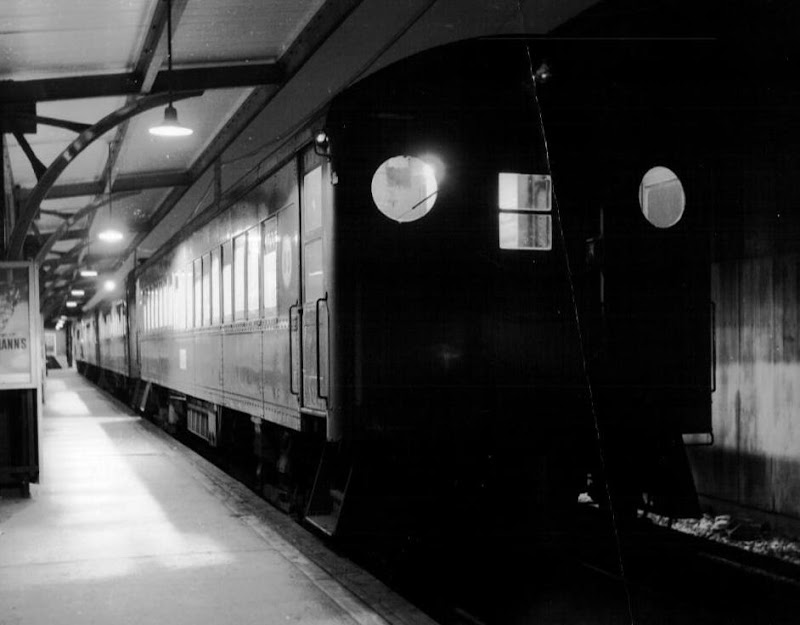
This was taken over a half century ago using Tri-X Pan film, no flash and a timed exposure:
Image

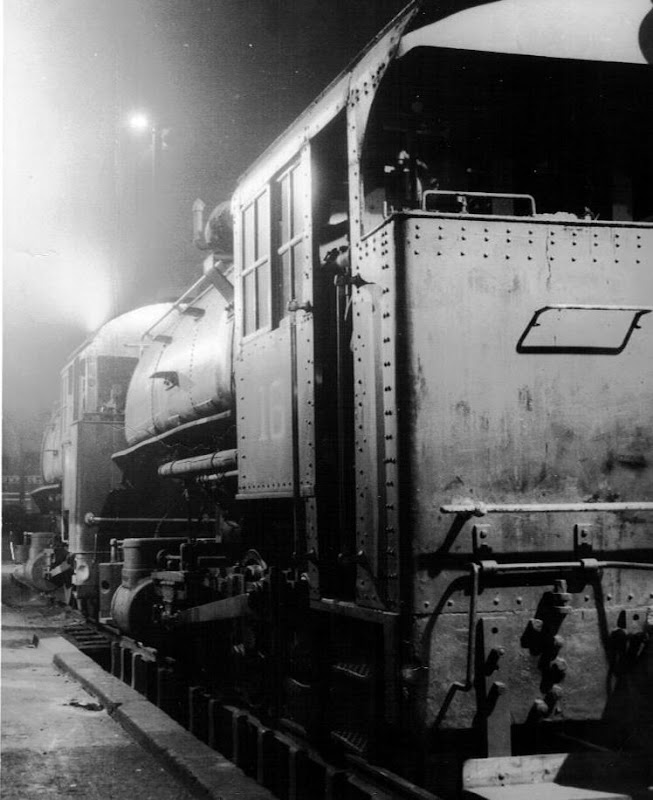
This was taken using several flash rigs (there were four photographers involved):
Image


Offline
 Profile  
 
 Post subject: Re: Items needed for night photography
PostPosted: Mon Oct 20, 2008 10:42 am 

Joined: Wed Jul 11, 2007 8:52 am
Posts: 7
Location: Marysville, PA
The bottom line on any night photography is it all takes practice. It's also very helpful if you know your subject and your camera ahead of time. "Point and shoot" cameras are generally not the best for night shots unless you know how to use their manual settings (if they even have them, some don't). You also don't -need- to have all those fancy lights, depending on what kind of shooting you're doing. If you want to preserve a "second in time", then you will need 'em, but if you want to do long duration, you do not. What you will need, is a tri-pod. They can be had from Circuit City or WalMart for less than $30 for the cheapie.

Next, you need to find a subject and get out there and try things. Try different settings, play with the camera and see what works and looks good to you. Don't take Gary Knapp's work as gospel. He shoots at ISO 1600 or 3200 and has to photoshop the noise out. I'm not dissing his work per se, but shots that are as good can be had without using Photoshop.

Here are some examples of my work...
First a double stack train at Cove, PA ISO 200, f/s 5.5 Duration 45 seconds.

http://www.rrpicturearchives.net/showPi ... id=1204331

Next, NS Hopper train at MP 117 on the Pitts line. ISO 200, f/s 4.5 duration 20 sec.

http://www.rrpicturearchives.net/showPi ... id=1228315


Then there are the shots with light setups. These generally use speedlights.

This is the GP at the Horseshoe Curve. ISO 100, f/s 7.0, dur 1/250 sec.

http://www.rrpicturearchives.net/showPi ... id=1241291

Here's one with the GP, but it has CR and NS helpers in the background. Same settings as the last one, but with a wide angle lense.

http://www.rrpicturearchives.net/showPi ... id=1237432

So as you can see, there are lots of different ways to do it. Go out and try it. With a digital, all you're wasting is electrons!

Russ...
PS. Here's one of my favourites:
Trailer Train crossing Rockville Bridge with lightning. ISO 200, f/s 4.5, Time 24 seconds
http://www.rrpicturearchives.net/showPi ... id=1215607


Offline
 Profile  
 
 Post subject: Re: Items needed for night photography
PostPosted: Mon Oct 20, 2008 12:52 pm 

Joined: Sun Aug 22, 2004 1:51 pm
Posts: 12151
Location: Somewhere east of Prescott, AZ along the old Santa Fe "Prescott & Eastern"
Re: Tripods:

Yes, you can get a cheap tripod from Mal-Wart, etc. for $30 or so. Lightweight tripods are easier to lug around. But there's a true value to heavier, sturdier tripods. A heavier tripod is far less likely to get blown over by wind or accidentally tripped over, at best rendering your photo unusable and at worst sending your camera crashing to the ground lens first. Most of my better tripods have a hook arrangement underneath them, the better to hang a heavy camera bag or even a railroad lantern underneath, the latter perfect for those all-too-frequent times when I'm by myself and setting up in the likes of a parking lot or passenger platform.

So the tripods get heavier. Be glad you're not lugging about a Speed Graphic and film holders like your ancestors in this avocation!

And you didn't ask about video but I'm saying it anyway: If I were made emperor, every video camera sold would have a stocky tripod welded to it, so we could be rid of all the shaky videos out there............


Offline
 Profile  
 
 Post subject: Re: Items needed for night photography
PostPosted: Mon Oct 20, 2008 3:25 pm 

Joined: Sat Aug 16, 2008 10:33 am
Posts: 65
I agree, a good tripod is worth it's weight in sharper photos and non shaking videos!
Cheap tripods are generally a study in frustration.

Another thing to consider with time exposures and slow shutter speeds, is the shake introduced by clicking the shutter. If your camera has a self timer, this will help, by having the shutter open well after your finger has pressed the button. A cable release or remote is even better.

Steve


Offline
 Profile  
 
Display posts from previous:  Sort by  
Post new topic Reply to topic  [ 14 posts ] 

All times are UTC - 5 hours [ DST ]


You cannot post new topics in this forum
You cannot reply to topics in this forum
You cannot edit your posts in this forum
You cannot delete your posts in this forum
You cannot post attachments in this forum

Search for:
Jump to: