| Railway Preservation News https://www.rypn.org/forums/ |
|
| Riveting with out riveting https://www.rypn.org/forums/viewtopic.php?f=1&t=37269 |
Page 1 of 1 |
| Author: | crij [ Mon Oct 27, 2014 5:19 pm ] |
| Post subject: | Riveting with out riveting |
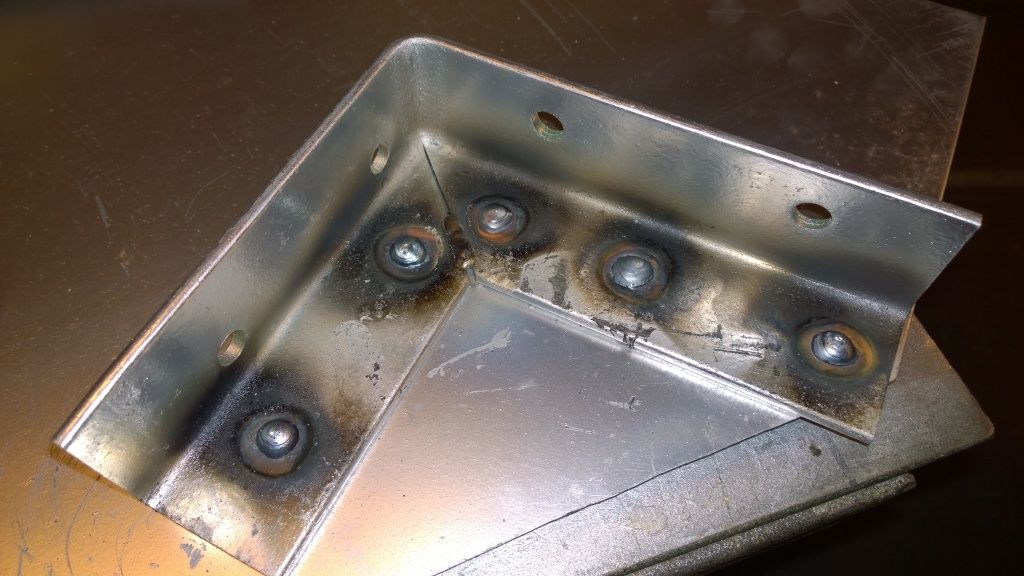
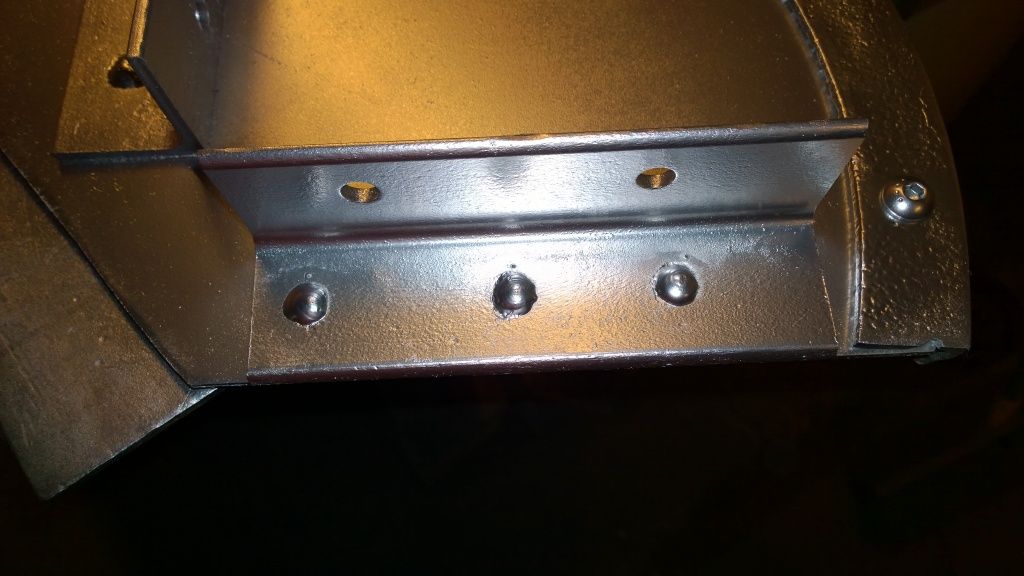
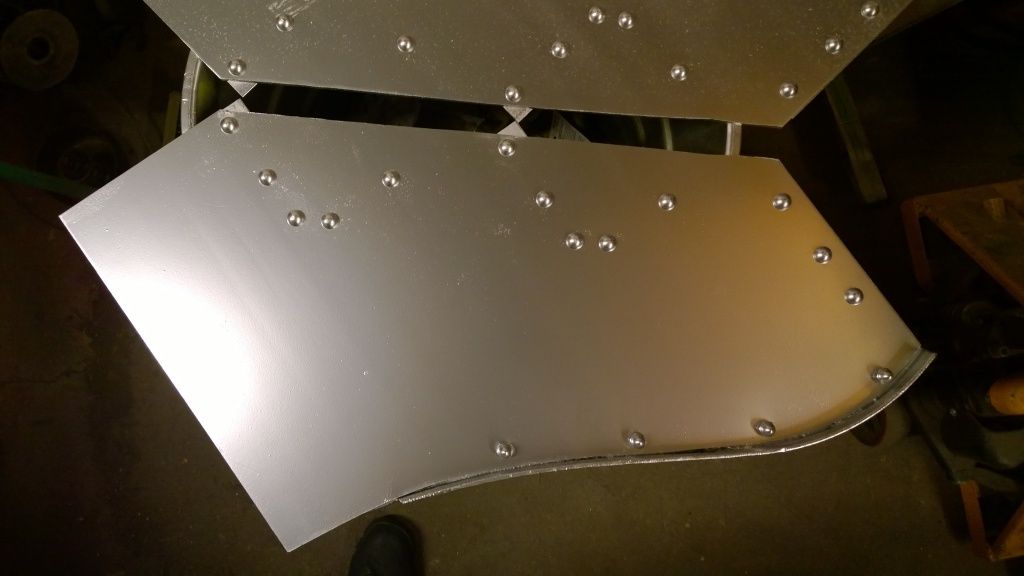
As I was working on the new stairs for Central Vermont Ry 4052 caboose, I started wondering why hasn't anyone mentioned this method as a restoration alternative for riveting. Our original stairs have turned to iron lace so as part of her restoration we are building new ones. The original risers and treads were mounted to angle irons that was riveted to the side panels. As we don't have a working rivet gun (other then POP Rivets...) but wanted to keep the mechanical strength and look came up with this method that as of yet has not been mentioned here (that I remember). All the others involved welding the assembly and gluing rivet heads to the surface, or bolting the assembly with button head bolts and filling the hex socket with Bondo. Basically the side panels are prepped the same as if they were going to be riveted, regular rivets are installed and everything is clamped so that everything is as compressed as possible and the tail of the rivet is melted/welded over with a TIG welder, leaving a round rivet like head on the hidden side of the assembly. ![]() ![]() ![]() As you can see the tail is welded to the hidden side, and as it cools the rivet draws the pieces even tighter. If both sides were going to be visible, one could go back and shape the weld with a rivet gun or rivet hammer. Regards, Rich Cizik Ct Eastern RR Museum Willimantic, Ct 06226 http://www.cteastrrmuseum.org For more info on this project: http://www.cteastrrmuseum.org/Caboose4052.htm On the second page of the latest newsletter you can see how she is coming: http://www.cteastrrmuseum.org/GTJ-SEPT2014.pdf The body of the caboose is nearly done, exterior is primed, frame is repaired, interior is about 3/4 done and roof exterior still needs to be done. If we can get enough funds it will be a EPDM rubber membrane. |
|
| Author: | Tavor [ Tue Oct 28, 2014 4:30 pm ] |
| Post subject: | Re: Riveting with out riveting |
Is the piece welded in any way aside from the rivet/weld hybrid? I find this really interesting. |
|
| Author: | crij [ Tue Oct 28, 2014 7:14 pm ] |
| Post subject: | Re: Riveting with out riveting |
On this the only weld was on the tail of the rivet (other then the one holding the angle iron bent), as I didn't want the weld line to show on the side panel. Rich C. |
|
| Author: | crij [ Wed Oct 29, 2014 6:50 pm ] |
| Post subject: | Re: Riveting with out riveting |
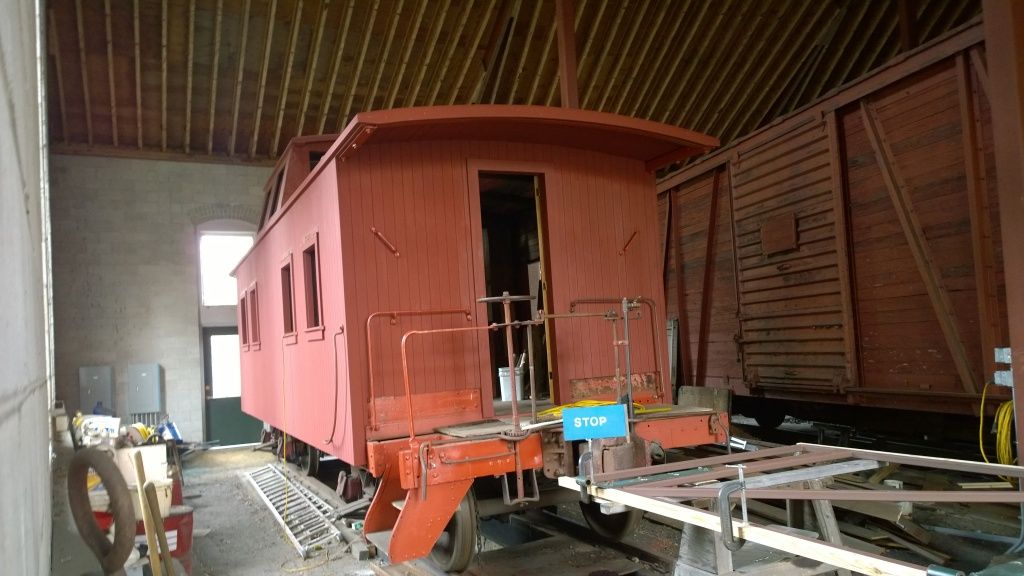
Mis-wrote that last e-mail. Swung by the museum to get sizes of the bolts needed to attach the stairs to the caboose. I noticed that on the first stair I built about 2-3 years ago, I did weld the top edge of the angle iron to the side panels for extra insurance. Will have to go back and add the weld to the one in the photos and the other 2 I am building. Rich C. here is what the outside face looks like: ![]() and here is what the caboose is looking like, currently only in primer, final coat will be the red/orange that CV used on their cabeese (last I heard) ![]() If you look close you can see a faint line just above the 3 horizontal rivets, from the weld. |
|
| Author: | k5ahudson [ Thu Oct 30, 2014 1:37 am ] | ||
| Post subject: | Re: Riveting with out riveting | ||
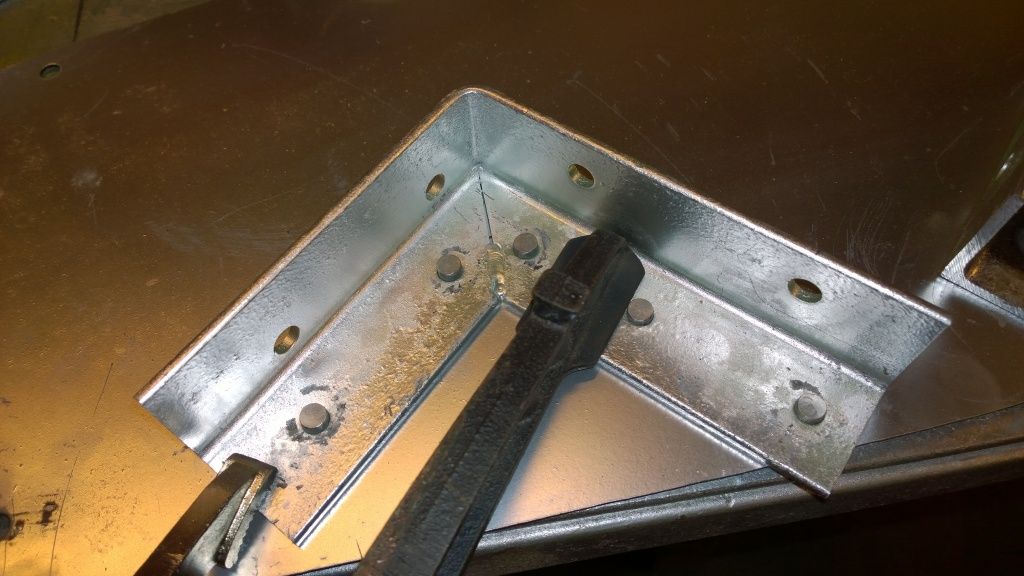
I've used this very same method for many years on several pieces of our equipment. It works really well. This is a repair I made last winter on our London & Port Stanley Railway, GE boxcab electric #L1. The rivets were installed by welding them on the back. Elgin County Railway Museum - http://www.ecrm5700.org
|
|||
| Author: | Lincoln Penn [ Thu Oct 30, 2014 12:44 pm ] |
| Post subject: | Re: Riveting with out riveting |
It looks great! I understand this is OK for display equipment, but can it be used on active equipment under current FRA regs? Strictly speaking of Safety Appliance items like steps, handrails, and grab irons; I understand there is no issue with other parts of the structure. |
|
| Author: | David Johnston [ Sat Nov 01, 2014 2:21 am ] |
| Post subject: | Re: Riveting with out riveting |
If you are going to be doing steel car restoration work, you might want to get into hot riveting. It is not that expensive and produces a very nice job. In car work you might be using 5/16 or 3/8 diameter rivets. These can be driven with a .498 gun, much lighter and easier to handle than the guns used on boiler work. I have driven 1/2" rivets with a .498 gun. You need to heat the rivets hot and drive them quickly. It will take a crew of three or four, but once you get up to speed it is faster than putting in bolts. WRM uses a IR AVC 26 gun. There is a CP equivalent, but I do not recall the model number. Talk to Jeff Devers at Michigan Pneumatics. I think their catalog is on line. Schaefer makes all the tools you need for the .498 gun. Rivets come from Champion or Jay Cee Sales. Rivets and bolts work differently. In shear the hot driven rivet fills the hole completely and handles the shear directly. Bolts are tightened to a specific torque and the resulting clamping force results in high friction between the two parts. This friction takes the shear force between the two parts. The method of welding in the rivets really does not achieve either method. And nothing will look more like the original than real hot rivets. |
|
| Page 1 of 1 | All times are UTC - 5 hours [ DST ] |
| Powered by phpBB © 2000, 2002, 2005, 2007 phpBB Group http://www.phpbb.com/ |
|