| Railway Preservation News https://www.rypn.org/forums/ |
|
| How About the Best Developments/True Stories https://www.rypn.org/forums/viewtopic.php?f=1&t=8360 |
Page 1 of 2 |
| Author: | Joshua [ Fri Jan 30, 2004 1:35 pm ] |
| Post subject: | How About the Best Developments/True Stories |
Reading through the legends, I was thinking about the best developments or actual true stories? Looking forward to reading some. Joshua |
|
| Author: | jimwrinn [ Fri Jan 30, 2004 2:21 pm ] |
| Post subject: | The front number plate... |
About 1987 or 88, volunteer Jim Tulloh was walkiing along the wash pit, and kicked at a piece of metal sticking out of the ground. When he did, a dirt and grease encrused rectangle of metal leaped form the groun. Upon cleaning it, it was easily identifiable: It was the front number plate from a 4800-series Mikado based at Spencer back in the good ole days. Keep your metal detectors home... that's all that's been found... and no, there is NOT a Ps4 frame buried behind the Roundhouse! http://nctrans.org Wrinnbo@aol.com |
|
| Author: | James Hefner [ Fri Jan 30, 2004 5:41 pm ] |
| Post subject: | Re: How About the Best Developments/True Stories |
> Reading through the legends, I was thinking > about the best developments or actual true > stories? Looking forward to reading some. > Joshua Actual "lost locomotives" that have been found, and in some cases even recovered: * The locomotive recently found in the lead mine. * A French built tank engine raised from Gatun Lake on the Panama Canal. It was used by the French when they tried to build to canal, and was lost when Gatun Lake was formed. * The Vulcan Iron Works lokie found buried on the Ginther Coal co., Cumbola site in 2001; last heard it was at a salvage yard in Gilberton, PA. * The Great Western Power Porter found when a lake behind a dam was drained, and is now in display on Main Street Chester, CA. * The H.K. Porter tram engine that was dug up and is now in storage in Port Townsend, WA. Not a discovery or preservation story per say (more like a survival story), but I will always remember when I recieved an e-mail from one of my contacts who works for the United Nations. He sent pictures of the three Borsig tank engines in the back of the museum in Kabul, Afghanistan. (This is the same museum where the Taliban smashed those statues.) He wrote that he was sorry the pictures weren't close up, but "while the area is supposed to be clear of mines, you just never know." You could also see bombed out buildings in the background; it overwelmed me that he had risked taking those pictures for my project. Also, the LMS Stanier 2-8-0 that was seen in Bagdad prior to the two Gulf Wars appears to have survived. Two frames, perhaps from USATC 0-6-0T engines also seen before the war, were also found. (In the "rumor" catagory is the report of a shed full of engines seen in Iraq prior to the two Gulf wars.) -James Hefner Hebrews 10:20a Surviving World Steam Project james@survivingworldsteam.com |
|
| Author: | Richard [ Fri Jan 30, 2004 6:46 pm ] |
| Post subject: | Shopped before scrapped. |
This is a great thread! It is well known that Canadian National, Canadian Pacific, Nickel Plate, and a few other roads (possibly CB&Q) did shop some of their large locomotives, only to leave them lined up, unused and unassigned at the close of steam. A few did make it into parks and museums, but the vast majority were cut up. Most roads squeezed the last few hours of service out of operable steam, slicked 'em up with paint and placed them on plinths. About a year ago, someone listed a park loco that was actually fired up and run directly off display. Maine Central used some old Consolidation boiler to reinforce the Kennebec River bank in Waterville. These have since been removed. My favorite myth was the brand new Pennsy J1 that derailed on the Curve, only to be buried there rather than rerailed. Still, many of these myths gain creedance when you find that some roads just wanted to get rid of steam loco pieces and parts. I love hearing about the builder's plate, headlight, number plate, or pressure gauge that was just kicked up somewhere. I've found a few small items in that manner, just walking abandoned roadbed. glueck@maine.edu |
|
| Author: | Taylor Rush [ Fri Jan 30, 2004 7:29 pm ] |
| Post subject: | Harp... *PIC* |
Last summer we found the remains of a Utah Central harp switchstand cast in 1880. It came off of an old Stoddard Lumber branch in Eastern Oregon, and had apparently come via the Sumpter Valley purchasing equipment and materials from Union Pacific. It was one of those right place at the right time things since all that was exposed when we found it was a corner of iron poking out of the ground. Thanks, Taylor Sumpter Valley Railway ![]() thrush@smt-net.com |
|
| Author: | Dave [ Fri Jan 30, 2004 7:44 pm ] |
| Post subject: | Re: How About the Best Developments/True Stories |
Old strap rail used for building reinforcement and lintels in Savannah shops. Pear Shaped iron rail used for railings and fenders in the Western of Alabama shops in Montgomery. The number 85 found under layers of paint and varnish on the Charlotte Trolley when it was just a recycled chicken coop, identifying it as a home built car and the last trip car. The original trolley tracks dug out from under asphalt in Central Avenue in Charlotte during the restoration project. Unfortunately, rather than restore them, the city removed and scrapped them. Now a new trolley route along the same street is projected to be built in 12-15 years for untold millions. We coulda just hung the wire...... dave irondave@bellsouth.net |
|
| Author: | BrianF [ Fri Jan 30, 2004 8:43 pm ] |
| Post subject: | Not a myth |
> About a year ago, someone listed a park loco that was actually fired up and run directly off display. Sorry. This is not a myth but a fact. U.S. Plywood #11, a Baldwin logging Malley, was steamed up and moved off the University of Washington Campus (in Seattle) under it's own power in 1974. It had been a static display on the campus since 1961. The locomotive is currently undergoing cosmetic restoration at the Northwest Railway Museum in Snoqualmie WA. brianf425@yahoo.com |
|
| Author: | Matt Bumgarner [ Fri Jan 30, 2004 9:08 pm ] |
| Post subject: | True Stories- Caro & N-W shops |
While researching for a book on the Carolina & North-Western I took a field trip with Frank Coffey, the legendary Tarheel loco machinist and former GF of the C&N-W. We went to what had always been a vacant lot for years in Hickory, North Carolina, and together, me and the 85-year old man walked every inch of that lot with a pen and paper. He pointed out every foundation, every cornerstone, every steel I-beam that had been cut at the ground. Within 3 hours, we had reconstructed to scale the shops, coach shed, and transfer table, complete with center to center measurements of every piece of steel used to build the buildings. It really felt like we brought the place back to life, and Frank always said, "Goddam it son, the only thing we ever wasted around here was the smoke, it was used to fertilize the fields." http://www.tarheelpress.com/CNW2.html stealthnfo@aol.com |
|
| Author: | John bohon [ Fri Jan 30, 2004 9:29 pm ] |
| Post subject: | Re: How About the Best Developments/True Stories |
Something like 25 years ago I was in the cab of the 0-6-0 at Williams Grove which was then lettered Williams Grove number 5, the number it wore for many years in the steel mill. I was sitting in the engineer's seat performing some long forgotten task and the sun was comming in the cab window brightly illuminating the cab. Glancing down at the johnson bar in the glaring sunlight I saw the number 643 stamped into the bar under several coats of paint. For years we had been trying to determine the B-4a's number when it had been on the PRR and it had been right in front of us all the time. Further checking under many layers of paint found the number to be stamped in nearly every part of the running gear. A little research found the 643 had been built the same month and year found on the locomotive's builders plate. The next time number 5 was painted she became PRR 643. As they say, the rest is history. John jhbohon@yahoo.com |
|
| Author: | Erik Ledbetter [ Fri Jan 30, 2004 9:48 pm ] |
| Post subject: | Re: How About the Best Developments/True Stories *PIC* |
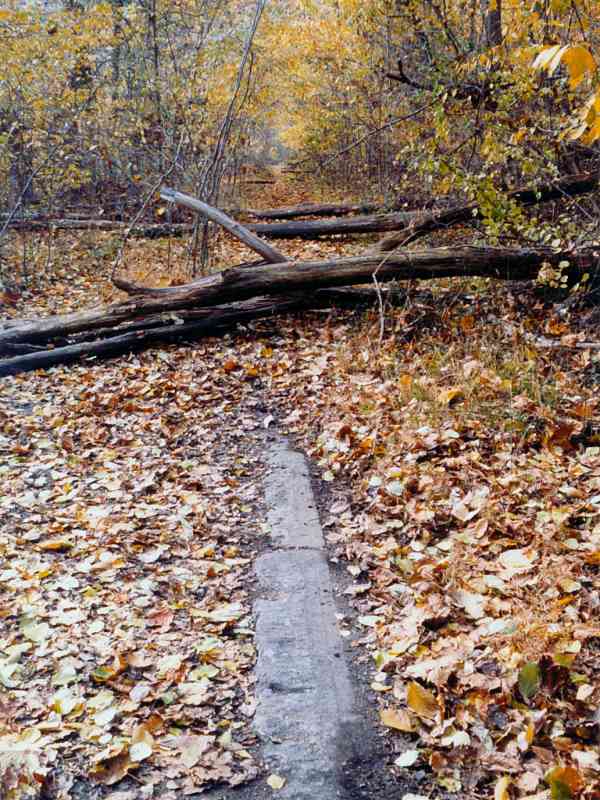
Stone stringers from the original ca. 1830 B&O main line in the Patapsco Valley, most uncovered when Hurricane Agnes scoured the valley in 1972. ![]() eledbetter@rypn.org |
|
| Author: | Dan Cupper [ Fri Jan 30, 2004 11:13 pm ] |
| Post subject: | Re: Shopped before scrapped. |
Often there's some shred of truth mixed in with all of the alleged facts. Richard wrote: > My favorite myth was the brand new Pennsy J1 > that derailed on the Curve, only to be > buried there rather than rerailed. A PRR J1 (2-10-4) did derail in a spectacular three-train accident about a mile or two *east* of Horseshoe Curve -- and it did roll down over the embankment. But it wasn't buried -- PRR retrieved it and had it repaired. Dan Cupper Harrisburg, Pa. cupper@att.net |
|
| Author: | Alexander D. Mitchell IV [ Sat Jan 31, 2004 12:52 am ] |
| Post subject: | In a similar vein..... |
Iron strap rail from the 1840s(?), complete with wooden stringers, dug up in the side lot of President Street Station/Baltimore (Md.) Civil War Museum several years ago--then documented and covered right back up...... LNER4472-NOSPAM-@bcpl.net |
|
| Author: | David M. Wilkins [ Sat Jan 31, 2004 12:56 pm ] |
| Post subject: | Stone Stringers |
Several years ago, a country church new Midway Kentucky was building a new parking lot when construction crews uncovered stone stringers and iron strap rail on a portion of the original Lexington and Ohio Railroad. The line, which was relocated about the same time the railroad switched to wooden cross ties, was just simply abandoned. The church elected to keep several of these stone stringers in place, and some are on display in downtown Midway, Kentucky, which is Kentucky's first railroad town. david.wilkins@bardstown.com |
|
| Author: | Ted Miles [ Sat Jan 31, 2004 3:59 pm ] |
| Post subject: | Re: How About the Best Developments/True Stories |
Joshua, One of my favorite true stories in railroad preservation is the trade between the Colorado Railroad Museum and the Rhinelander Railroad Park in Wisconsin. Bob Richardsion got a Wisconsin timber engine, Thunder Bay 5 back from Mexico and returned the Denver South Psrk & Pacific 51 to Colorado. The South Park engine is now getting another cosmetic restoration with hardware, paint etc. Read the story in Iron Horse News #76, March 1973 and #106, Feb 1980. Ted Miles ted_miles@nps.gov |
|
| Author: | Wesley Paulson [ Sat Jan 31, 2004 11:03 pm ] |
| Post subject: | Re: How About the Best Developments/True Stories |
1. Riding with Dave Gaul, retired from ERPCC and Transit Research Corp. on an ex-CTA PCC rapid car on SEPTA's Norristown line in the late 1980s (or early 1990s). Dave was actively involved in the design of these cars. As we were riding along he gave a thorough explanation of why the motors developed a harmonic above a certain speed, and otherwise just smiled as we clocked off the miles. 2. After years of trying to salvage at least one intact conduit yoke from the Washington, DC system, I received a call from a paving contractor. He had dug up what appeared to be a vault for storm drainage in the conduit trackage. For $600, he carefully cleaned off the concrete and delivered two yokes, with rails attached to the Museum. The complete piece is just long enough to permit display of a streetcar truck with a plow hanging down in the slot rail. Someday. Wesley National Capital Trolley Museum |
|
| Page 1 of 2 | All times are UTC - 5 hours [ DST ] |
| Powered by phpBB © 2000, 2002, 2005, 2007 phpBB Group http://www.phpbb.com/ |
|